
Imagine building a city and numbering every house, but giving yourself only 4.3 billion house numbers for the entire planet. That is exactly the problem that networking engineers walked into when IPv4 was designed in the early 1980s. At the time, 4.3 billion addresses seemed impossibly large. Nobody predicted smartphones, smart TVs, IoT sensors, or billions of people coming online simultaneously.
Today, IP address exhaustion is not a future crisis; it already happened. The last free pool of IPv4 addresses was distributed in 2011. Understanding why this happened, what the internet did about it, and where things stand today is essential knowledge for any network engineer, sysadmin, or CCNA/CompTIA Network+ student.
What You Will Learn: What IP address exhaustion is, why IPv4 ran out, how NAT, CIDR, and IPv6 are solving it, the current state of the address market, and how this affects your network today.
What Is IP Address Exhaustion?
IP address exhaustion refers to the complete depletion of available, unallocated IPv4 addresses that can be freely assigned to new devices and networks. Every device connected to the internet requires a unique IP address to send and receive data. Without one, it simply cannot communicate.
The Internet uses two major addressing systems:
- IPv4 (Internet Protocol version 4): Uses a 32-bit address space, supporting approximately 4,294,967,296 unique addresses. Written in dotted-decimal notation (e.g., 192.168.1.1).
- IPv6 (Internet Protocol version 6): Uses a 128-bit address space, supporting 340 undecillion addresses a number so large it would assign trillions of addresses to every grain of sand on Earth.
When people talk about IP address exhaustion, they almost always mean IPv4 exhaustion, the point where the global pool of unassigned IPv4 addresses hits zero and can no longer be freely allocated.
Quick Fact: 4.3 billion sounds like a lot. But with over 15 billion internet-connected devices globally in 2025, it was never going to be enough.
Why Did We Run Out? The Root Causes of IPv4 Exhaustion
IPv4 exhaustion did not happen overnight. It was a slow, predictable crisis that networking professionals saw coming as early as the late 1980s. Several forces combined to accelerate address depletion far beyond original projections.
1. The 32-Bit Address Limit
IPv4 was designed in 1981 under RFC 791. Engineers at the time were building a network for universities and research labs — not a global commercial internet. A 32-bit address space gave them 2³² = 4,294,967,296 addresses, which seemed enormous for the purpose.
The fatal assumption was that not every device on Earth would need its own public IP. That assumption turned out to be completely wrong.
2. Classful Addressing Wasted Millions of IPs
In the early days, IP addresses were divided into fixed address classes Class A, B, and C. A company that needed 300 addresses had to take a full Class C block (256 addresses) or a Class B block (65,536 addresses). The unused addresses in those blocks sat idle, wasted, and unavailable to anyone else.
This classful addressing model squandered an estimated 30–40% of the total IPv4 address space before Classless Inter-Domain Routing (CIDR) was introduced in 1993 to fix it.
3. The Internet Explosion
The commercialization of the internet in the 1990s triggered exponential growth. Millions of households, businesses, and eventually mobile users all demanded public IP addresses. The growth curve was nothing like the research environment IPv4 was designed for.
4. The IoT and Mobile Revolution
The smartphone era after 2007 and the rise of Internet of Things (IoT) devices pushed demand into overdrive. By the mid-2010s, devices like smart thermostats, security cameras, wearables, industrial sensors, and connected appliances were each requesting their own IP address allocation.
5. Inefficient Historical Allocations
In the early internet, large organizations were handed enormous address blocks with little oversight. For example, MIT, Apple, Ford, and the US Department of Defense each received a full /8 block (16.7 million addresses)—most of which sat unused for decades.
The IPv4 Exhaustion Timeline
Here is when each major milestone in the global IP address depletion occurred:

| Year | Event | Impact |
| 1981 | IPv4 designed (RFC 791) | 32-bit limit locked in |
| 1993 | CIDR introduced | Slowed exhaustion, improved efficiency |
| 1994 | NAT introduced | Allowed private IPs behind one public IP |
| 2011 (Jan 31) | IANA exhausted its pool | No more free /8 blocks to distribute |
| 2011–2019 | All 5 RIRs hit exhaustion | APNIC (2011), RIPE NCC (2019) last |
| 2020–2025 | IPv4 transfer market grows | Buying/selling IPs at $35–$60 per address |
| 2025 (ongoing) | IPv6 adoption at ~48% | Dual-stack now standard best practice |
Who Manages IP Addresses? Understanding the RIR System
IP addresses are not owned by any single company or government. They are managed by a hierarchy of organizations:
- IANA (Internet Assigned Numbers Authority): The global authority that manages the overall IP address space and distributes large blocks to regional registries.
- RIRs (Regional Internet Registries): Five organizations that receive blocks from IANA and distribute them to ISPs and organizations within their regions.
- ISPs and Network Operators: Receive address blocks from their RIR and assign them to end users and customers.
The five Regional Internet Registries (RIRs) are:
| RIR | Region | IPv4 Pool Status (2025) |
| ARIN | North America | Exhausted — waitlist only |
| RIPE NCC | Europe, Middle East, Central Asia | Exhausted — last /22 policy |
| APNIC | Asia Pacific | Exhausted — waitlist active |
| LACNIC | Latin America & Caribbean | Exhausted — Phase 4 restrictions |
| AFRINIC | Africa | Near exhausted — under legal dispute |
For CCNA Students: IANA and RIR operations are a tested topic in the Cisco CCNA 200-301 exam. Understanding the address hierarchy is essential for your certification.
How Has the Internet Survived Without New IPv4 Addresses?
Here is the surprising reality: the internet kept growing even after IPv4 ran out. This was possible because of three major IP address conservation techniques that buy time while the transition to IPv6 continues.
1. NAT — Network Address Translation

Network Address Translation (NAT) is the single biggest reason the Internet did not collapse in 2011. NAT allows an entire network of devices to share a single public IP address.
Your home router is a perfect example. Your ISP assigns your router a public IP address (e.g., 203.0.113.5). Every device inside your home — your laptop, phone, smart TV, gaming console — gets a private IP address (e.g., 192.168.1.x). When any of those devices talks to the internet, NAT translates the private IP to the public one and back again.
This multiplied the effective reach of every single public IP address by thousands. NAT (RFC 1918) is why we still have a functioning internet despite IPv4 exhaustion.
Try It: Use SubnetLab’s IPv4 Subnet Calculator to explore private IP ranges (10.0.0.0/8, 172.16.0.0/12, 192.168.0.0/16) that NAT makes possible. → subnetlab.com/ipv4-subnet-calculator/
2. CIDR — Classless Inter-Domain Routing
Classless Inter-Domain Routing (CIDR), introduced in 1993, replaced the wasteful classful system with a flexible prefix-length notation. Instead of being forced into Class A/B/C blocks, organizations could now request exactly the size of block they needed: a /28 for 14 hosts, a /22 for 1,022 hosts, and so on.
CIDR also enabled route aggregation (supernetting), which reduced the size of global BGP routing tables and made the Internet more scalable.
Try It: Convert any IP range to CIDR notation instantly using SubnetLab’s CIDR Converter. → subnetlab.com/cidr-converter/
3. Private Address Spaces (RFC 1918)
RFC 1918 formally defined three ranges of private IP addresses that are never routed on the public Internet:
- 0.0.0/8 — Class A private range (16.7 million addresses)
- 16.0.0/12 — Class B private range (1 million addresses)
- 168.0.0/16 — Class C private range (65,536 addresses)
These ranges can be reused by any organization independently, and NAT bridges them to the public internet. This effectively multiplied usable address space by many orders of magnitude.
IPv6: The Real Long-Term Solution
IPv6 was developed specifically to replace IPv4 and solve exhaustion permanently. Published as RFC 2460 in 1998 and updated in RFC 8200 (2017), IPv6 uses a 128-bit address space that provides the following:
| Feature | IPv6 Specification |
| Address size | 128-bit |
| Total addresses | ~340 undecillion (3.4 × 10³⁸) |
| Address format | Hexadecimal, colon-separated (e.g., 2001:db8::1) |
| NAT required? | No every device gets a unique public address |
| Built-in security | IPsec mandatory in design |
| Header format | Simplified better router performance |
How Slow Is IPv6 Adoption?
Despite being ready since the late 1990s, IPv6 adoption has been frustratingly slow. The main barriers are the following:
- Legacy hardware and software: Millions of routers, firewalls, and servers are IPv4-only.
- NAT dependency: Because NAT “solved” the immediate crisis, many organizations felt no urgency to migrate.
- Cost and complexity: Full IPv6 migration requires reconfiguring networks, updating infrastructure, and retraining staff.
As of mid-2025, global native IPv6 adoption has reached approximately 48–49% as measured by Google’s connectivity statistics. That means roughly half of global internet traffic is now IPv6. Progress is real but gradual.
Dual-Stack: Running IPv4 and IPv6 Together
Dual-stack configuration is the current industry standard for transitioning to IPv6 without breaking IPv4 compatibility. In a dual-stack network, every device runs both protocols simultaneously — it can speak IPv4 to legacy systems and IPv6 to modern ones.
Related Guide: See SubnetLab’s complete guide to Dual-Stack IPv4/IPv6 Configuration for hands-on setup instructions. → subnetlab.com/blog/dual-stack-ipv4-ipv6/
The IPv4 Address Transfer Market
When IANA ran out of free IPv4 addresses in 2011, a secondary market emerged. Organizations with surplus IPv4 blocks began selling or leasing them to those who needed them. This created what is now a multi-billion dollar IPv4 address market.
| Year | Avg. Price/IP | Market Trend | Notes |
| 2014 | ~$10 | Rising | Market forming |
| 2018 | ~$20 | Steady climb | Enterprise demand grows |
| 2021 | ~$50 | Peak spike | COVID digital acceleration |
| 2023 | ~$43–$52 | Stabilizing | Supply/demand rebalancing |
| 2025 | $35–$60 | Stable/variable | Block size and quality drive price |
For most organizations, purchasing or leasing IPv4 addresses is now a line item in their IT budget — something that was unimaginable in the 1990s when IPs were free.
What Does IP Address Exhaustion Mean for You?
For Network Engineers and Sysadmins
If you manage enterprise or ISP-scale networks, IP address exhaustion affects your daily work in several ways:
- IP Address Management (IPAM): You need to track and optimize every address in your allocation. Wasted IPs cost money in today’s market.
- NAT design: Nearly every enterprise network runs NAT. Understanding NAT overload (PAT) and its limitations is essential.
- IPv6 planning: Delaying IPv6 adoption is no longer a sustainable strategy. Budget for dual-stack migration now.
- BGP and routing tables: The global BGP routing table has grown to over 950,000 IPv4 prefixes as address blocks get fragmented and resold, affecting router memory and performance.
For CCNA and Network+ Students
IP address exhaustion is a core exam topic. You should be comfortable explaining the following:
- Why IPv4 has a 4.3 billion address limit (32-bit math)
- How NAT conserves public IPs using private address spaces (RFC 1918)
- What CIDR is and how prefix notation (/24, /16, etc.) works
- The difference between public and private IP addresses
- Why IPv6 was developed and how dual-stack solves the transition problem
Practice Tool: Master subnetting before your exam with SubnetLab’s free IPv4 Subnet Calculator and VLSM Calculator. → subnetlab.com/ipv4-subnet-calculator/
For Everyday Users
For most end users, IP exhaustion is invisible — your ISP handles it. But it does affect you in two real ways:
- Carrier-Grade NAT (CGNAT): Many mobile and broadband ISPs now use CGNAT, placing you behind multiple layers of NAT. This can break peer-to-peer applications, gaming servers, and remote access tools.
- IPv6 support: If your ISP offers IPv6, enabling it on your router improves connectivity speed and end-to-end transparency for modern applications.
Related Tools
- CIDR and VLSM as active conservation tools (with a live calculator)
- The exact IANA → RIR → ISP → End User allocation chain
- A clear explanation of CGNAT and why it breaks gaming and remote access
- IPv6 dual-stack as the practical transition path (with a config guide)
- CCNA exam relevance is explicitly called out
Frequently Asked Questions (FAQs)
Q1: Is the Internet going to stop working because of IP address exhaustion?
No. The internet will not stop working. NAT, CIDR, private address spaces, and the gradual rollout of IPv6 collectively ensure continuity.
The exhaustion of IPv4 address allocation means new addresses cannot be freely obtained from registries.
But existing addresses continue to function, and IPv6 provides unlimited new space.
Q2: What is the difference between public and private IP addresses?
Public IP addresses are globally unique and routable on the internet, assigned by your ISP from their RIR allocation. Private IP addresses (defined by RFC 1918) are used inside local networks and are never routed on the public Internet. NAT translates between them. Private ranges are 10.0.0.0/8, 172.16.0.0/12, and 192.168.0.0/16.
Q3: When did IPv4 address exhaustion actually happen?
The top-level exhaustion occurred on January 31, 2011, when IANA distributed its last /8 blocks to the five Regional Internet Registries.
Each RIR then exhausted its own pool between 2011 and 2019, with RIPE NCC (Europe) being the last to announce full depletion in November 2019.
Q4: Will IPv6 completely replace IPv4?
Eventually, yes, but not anytime soon. The dual-stack transition is designed to allow IPv4 and IPv6 to coexist indefinitely until IPv6 is ubiquitous.
Most major platforms, ISPs, and CDNs already support IPv6. However, legacy infrastructure, embedded systems, and some enterprise networks will run IPv4 for many more years.
Q5: What is CGNAT and why does it matter?
Carrier-Grade NAT (CGNAT), defined in RFC 6598, is a technique used by ISPs to place entire neighborhoods or cities behind a single public IP address.
It is a stopgap measure for IPv4 exhaustion, but it breaks applications that assume end-to-end connectivity, including some gaming platforms.
VPN protocols and self-hosted servers. If your ISP uses CGNAT, you may need to request a dedicated public IP or use IPv6.
Q6: Can I buy IPv4 addresses?
Yes. A functioning secondary market for IPv4 address transfers exists and is growing. Addresses are bought and sold (or leased) through brokers and directly through RIR-approved transfer policies.
As of 2025, prices range from approximately $35 to $60 per IPv4 address, depending on block size, location, and reputation of the address space.
Q7: How does subnetting relate to IP address exhaustion?
Subnetting is a direct conservation tool. By dividing address blocks into precisely sized subnets (using VLSM—Variable Length Subnet Masking), network engineers allocate only as many IPs as a segment needs, no more, no less.
This efficiency helps maximize the usability of whatever IPv4 space an organization holds.
Practice subnetting: Use SubnetLab’s free VLSM Calculator to design efficient IP schemes for your network.
Q8: Is IPv6 really necessary if NAT already solves the problem?
NAT is a workaround, not a solution. It introduces complexity, breaks end-to-end connectivity, complicates troubleshooting, and creates performance overhead.
IPv6 provides every device a globally unique, routable address, restoring the original architectural intent of the Internet. For modern applications like IoT at scale, 5G networks, and real-time communications, NAT is a significant barrier. IPv6 is not optional in the long run.
Conclusion
IP address exhaustion is one of the most consequential engineering challenges in Internet history. The fact that the internet kept growing after IPv4 ran out in 2011 is a testament to the ingenuity of solutions like NAT, CIDR, and private RFC 1918 addressing. But these are bridges, not destinations.
IPv6 is the permanent solution — and with adoption now approaching 50%, the transition is finally gaining real momentum. Whether you are studying for your CCNA, designing an enterprise network, or just trying to understand why your gaming connection breaks through CGNAT, understanding IP address exhaustion gives you the foundation to make smarter networking decisions.
Use the tools below to practice what you have learned:
Author Profile

-
Muhammad Kazim Ali – Owner & Principal Engineer at SubnetLab.com (real-world networking labs).
10+ years in routing, switching & infrastructure design. Helps students, pros & enterprises master networking via practical labs. Based in Lahore, works with ISPs, data centers & tech teams.
📞 +92 343 5201037 (WhatsApp) | ✉️ subnetlab.official@gmail.com | 🌐 subnetlab.com
Latest entries
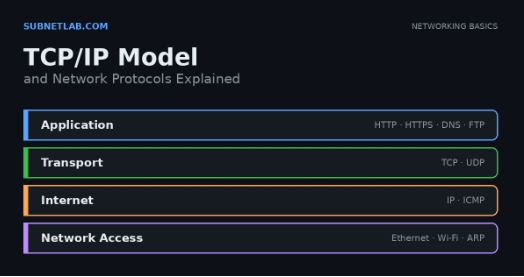 Network BlogAugust 25, 2026TCP/IP Model and Network Protocols Explained:TCP, UDP, ICMP, Handshakes, Flags, and Data Flow
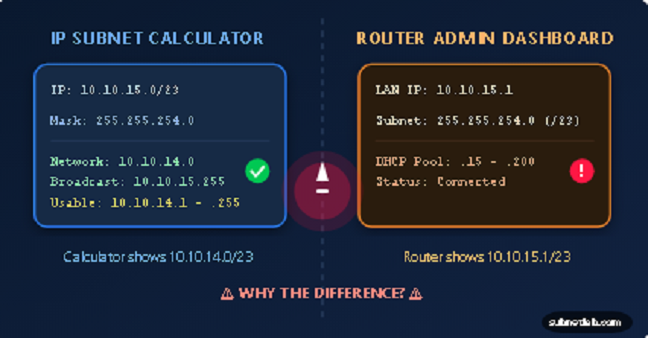 Network BlogAugust 11, 2026Router vs Calculator Showing Different Subnets? Why & the Fix
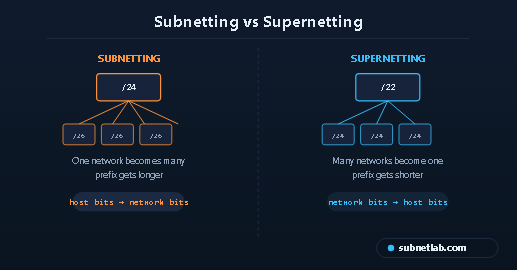 Network BlogAugust 6, 2026Supernetting Explained: The Opposite of Subnetting
 Network BlogAugust 5, 2026Ping Command Explained:Your First Tool for Network Troubleshooting