
CCNA 200-301Subnetting Practice Questions Complete Exam Preparation Guide — 2026 Edition IPv4 | VLSM | CIDR | Subnet Masks | Host Calculations |
What Is Subnetting and Why It Matters for CCNA
Subnetting is the process of dividing a single IP network into smaller, logically separate “subnets.” It is consistently one of the most tested — and most feared — topics on the Cisco Certified Network Associate (CCNA 200-301) examination.
In enterprise environments, network engineers use subnetting every day: designing branch-office LANs, assigning VLANs on multilayer switches, configuring OSPF area boundaries, and writing access control lists (ACLs). A professional who cannot subnet quickly and accurately is at a severe disadvantage.
Subnetting solves three fundamental networking problems:
- IP Address Conservation — IPv4 provides only ~4.3 billion unique addresses. Subnetting allocates address blocks proportional to actual need.
- Network Segmentation — Isolating traffic between departments, VLANs, and security zones improves both security and manageability.
- Broadcast Domain Reduction — Limiting broadcast scope dramatically improves performance as networks scale.
-
Key Entities and Topic Coverage
The following entities appear in virtually every CCNA subnetting scenario. Command these definitions before attempting any calculation.
| Entity | Definition | Example |
| IP Address | 32-bit logical address assigned to a network interface | 192.168.10.50 |
| Subnet Mask | 32-bit value separating network and host portions | 255.255.255.0 |
| CIDR Prefix / Prefix Length | Slash notation indicating the count of network bits | /24 |
| Network Address | First address in a subnet; all host bits = 0 | 192.168.10.0 |
| Broadcast Address | Last address in a subnet; all host bits = 1 | 192.168.10.255 |
| Usable Host Range | Addresses between network and broadcast addresses | 192.168.10.1 – .254 |
| Default Gateway | Router interface IP on the local subnet | 192.168.10.1 |
| Wildcard Mask | Inverse of subnet mask; used in ACLs and OSPF | 0.0.0.255 |
| VLSM | Variable Length Subnet Masking — different prefix lengths within one network | /26, /28, /30 |
| CIDR | Classless Inter-Domain Routing — flexible, modern subnetting standard | /19, /22, /27 |
| Subnets Created | Number of subnets = 2^s where s = subnet bits borrowed | 2^3 = 8 subnets |
| Usable Hosts | Hosts per subnet = 2^h – 2 where h = host bits remaining | 2^6 – 2 = 62 hosts |
IPv4 Address Classes
| Class | First Octet Range | Default Mask | Max Hosts/Network | Typical Use |
| Class A | 1 – 126 | /8 (255.0.0.0) | 16,777,214 | Large enterprises, ISPs |
| Class B | 128 – 191 | /16 (255.255.0.0) | 65,534 | Mid-size organizations |
| Class C | 192 – 223 | /24 (255.255.255.0) | 254 | Small LANs, branch offices |
| Class D | 224 – 239 | N/A | N/A | Multicast groups |
| Class E | 240 – 255 | N/A | N/A | Research / Reserved |
-
The Binary Foundation You Must Know
You cannot reliably solve subnetting problems without binary fluency. The CCNA exam tests your ability to convert between decimal, binary, and CIDR notation rapidly.
Octet Bit Values
Each octet is 8 bits. Bit positional values from left to right:
| Bit 7 | Bit 6 | Bit 5 | Bit 4 | Bit 3 | Bit 2 | Bit 1 | Bit 0 |
| 128 | 64 | 32 | 16 | 8 | 4 | 2 | 1 |
Core Formulas
| Formula | Description | Example |
| 2^s | Number of subnets created (s = bits borrowed) | Borrow 3 bits → 2^3 = 8 subnets |
| 2^h – 2 | Usable hosts per subnet (h = host bits left) | /26 → 6 host bits → 2^6-2 = 62 hosts |
| 256 – mask octet | Block size / subnet increment | Mask = 192 → 256-192 = 64 block |
| Wildcard = 255 – mask | Wildcard mask from subnet mask | 255.255.255.0 → wildcard 0.0.0.255 |
Subnet Mask Cheat Sheet
| CIDR | Subnet Mask | Block Size | Usable Hosts | # Subnets from /24 |
| /24 | 255.255.255.0 | 256 | 254 | 1 |
| /25 | 255.255.255.128 | 128 | 126 | 2 |
| /26 | 255.255.255.192 | 64 | 62 | 4 |
| /27 | 255.255.255.224 | 32 | 30 | 8 |
| /28 | 255.255.255.240 | 16 | 14 | 16 |
| /29 | 255.255.255.248 | 8 | 6 | 32 |
| /30 | 255.255.255.252 | 4 | 2 | 64 |
| /31 | 255.255.255.254 | 2 | 2* | 128 |
| /32 | 255.255.255.255 | 1 | 1 host | 256 |
* /31 is used for point-to-point links (RFC 3021) — no network/broadcast address consumed.
-
Practice Questions — Beginner Level
The following questions mirror the style and difficulty of foundational CCNA subnetting tasks. Work through each before reading the explanation.
| Q1 What is the default subnet mask for a Class B IP address? [EASY] |
| A. 255.0.0.0 |
| B. 255.255.0.0 |
| C. 255.255.255.0 |
| D. 255.255.255.128 |
| Explanation:
Class B addresses span the first-octet range 128–191 and carry a default /16 mask, expressed as 255.255.0.0. Class A uses /8 (255.0.0.0), and Class C uses /24 (255.255.255.0). |
| Q2 How many usable host addresses exist in a /28 subnet? [EASY] |
| A. 14 |
| B. 16 |
| C. 30 |
| D. 32 |
| Explanation:
A /28 leaves 4 host bits (32 – 28 = 4). Total addresses = 2^4 = 16. Subtract 2 (network + broadcast) = 14 usable hosts. This mask (255.255.255.240) is common for small server clusters. |
| Q3 Which address represents the broadcast address for the subnet 192.168.1.64/26? [EASY] |
| A. 192.168.1.64 |
| B. 192.168.1.127 |
| C. 192.168.1.128 |
| D. 192.168.1.255 |
| Explanation:
Block size for /26 = 256 – 192 = 64. Subnet starts at .64, next subnet starts at .128. Broadcast is the last address before the next subnet: 192.168.1.127. All host bits are set to 1 in the broadcast address. |
| Q4 A host has IP address 10.0.0.1/8. What is its network address? [EASY] |
| A. 10.0.0.0 |
| B. 10.255.255.255 |
| C. 10.0.0.1 |
| D. 0.0.0.1 |
| Explanation:
The /8 prefix means only the first octet defines the network. Zeroing all host bits (octets 2–4) gives 10.0.0.0. This is a Class A address space commonly used in large private networks. |
| Q5 What is the wildcard mask for a /24 subnet? [EASY] |
| A. 255.255.255.0 |
| B. 0.0.0.255 |
| C. 0.255.255.255 |
| D. 255.0.0.0 |
| Explanation:
Wildcard mask = 255.255.255.255 – subnet mask. For /24 (255.255.255.0): 255-255=0, 255-255=0, 255-255=0, 255-0=255. Result: 0.0.0.255. Wildcard masks are used in OSPF network statements and ACLs. |
-
Practice Questions — Intermediate Level
| Q6 You need at least 50 hosts per subnet from the network 172.16.0.0/16. Which subnet mask should you use? [MEDIUM] |
| A. 255.255.255.128 (/25) |
| B. 255.255.255.192 (/26) |
| C. 255.255.255.224 (/27) |
| D. 255.255.255.240 (/28) |
| Explanation:
/26 provides 2^6 – 2 = 62 usable hosts, which satisfies the minimum of 50. /27 provides only 30 hosts (insufficient). /25 provides 126 hosts but wastes more address space. Always choose the smallest subnet that satisfies the requirement. |
| Q7 How many subnets are created when you subnet 192.168.5.0/24 with a /27 mask? [MEDIUM] |
| A. 4 |
| B. 6 |
| C. 8 |
| D. 16 |
| Explanation:
Borrowing bits from a /24 to reach /27 means borrowing 3 bits (27 – 24 = 3). Number of subnets = 2^3 = 8. Each /27 subnet has a block size of 32, so subnets are .0, .32, .64, .96, .128, .160, .192, .224 — exactly 8 subnets. |
| Q8 A router interface has IP 172.20.15.193/27. What is the subnet’s network address? [MEDIUM] |
| A. 172.20.15.160 |
| B. 172.20.15.192 |
| C. 172.20.15.224 |
| D. 172.20.15.128 |
| Explanation:
Block size for /27 = 256 – 224 = 32. Subnets: .0, .32, .64, .96, .128, .160, .192, .224. The host 172.20.15.193 falls in the .192 block (192 to 223). Network address = 172.20.15.192. |
| Q9 Which private IP address range belongs to Class A according to RFC 1918? [MEDIUM] |
| A. 192.168.0.0 – 192.168.255.255 |
| B. 172.16.0.0 – 172.31.255.255 |
| C. 10.0.0.0 – 10.255.255.255 |
| D. 169.254.0.0 – 169.254.255.255 |
| Explanation:
RFC 1918 defines three private ranges: Class A = 10.0.0.0/8 (one full Class A block), Class B = 172.16.0.0–172.31.255.255 (/12), Class C = 192.168.0.0/16. 169.254.x.x is APIPA, not RFC 1918. |
| Q10 What is the maximum number of valid host addresses in a /29 subnet? [MEDIUM] |
| A. 8 |
| B. 6 |
| C. 14 |
| D. 30 |
| Explanation:
A /29 leaves 3 host bits (32 – 29 = 3). Total = 2^3 = 8 addresses. Subtract network and broadcast = 6 usable host addresses. /29 subnets (block size 8) are common for small point-of-presence or management segments. |
-
Practice Questions — Advanced Level
| Q11 A network 192.168.100.0/24 must be divided into subnets: one needing 60 hosts, one needing 28 hosts, and one needing 12 hosts. Using VLSM, what mask would you assign to the 60-host subnet? [HARD] |
| A. /25 (126 hosts) |
| B. /26 (62 hosts) |
| C. /27 (30 hosts) |
| D. /28 (14 hosts) |
| Explanation:
For 60 hosts you need at least 62 usable host addresses. /26 provides 2^6 – 2 = 62. /25 would give 126 but wastes address space. In VLSM, always assign the smallest prefix that fits the requirement, then allocate remaining space to smaller subnets. |
| Q12 You have been given 203.0.113.0/24. A branch needs 100 hosts, another needs 50 hosts, and a third needs 25 hosts. After VLSM allocation, what is the network address of the third subnet? [HARD] |
| A. 203.0.113.0 |
| B. 203.0.113.128 |
| C. 203.0.113.192 |
| D. 203.0.113.224 |
| Explanation:
Allocate largest first. 100-host subnet = /25 (126 hosts) → 203.0.113.0/25 (.0–.127). 50-host subnet = /26 (62 hosts) → 203.0.113.128/26 (.128–.191). 25-host subnet = /27 (30 hosts) → 203.0.113.192/27 (.192–.223). Third subnet network = 203.0.113.192. |
| Q13 An ACL on a Cisco router uses the entry: permit ip 10.10.20.0 0.0.0.63. What is the equivalent CIDR prefix? [HARD] |
| A. /24 |
| B. /25 |
| C. /26 |
| D. /27 |
| Explanation:
Wildcard 0.0.0.63 means 63 = 64 – 1, indicating 6 host bits. Prefix = 32 – 6 = /26. Alternatively: wildcard complement = 255.255.255.192 which is a /26 mask. OSPF and ACLs both rely on wildcard masks — always convert to verify scope. |
| Q14 How many bits must be borrowed from a Class C /24 network to create at least 12 subnets while maximising hosts per subnet? [HARD] |
| A. 3 |
| B. 4 |
| C. 5 |
| D. 6 |
| Explanation:
2^4 = 16 subnets (satisfies >=12). 2^3 = 8 (insufficient). Borrowing 4 bits leaves 4 host bits per subnet = 2^4 – 2 = 14 usable hosts. Borrowing 5 bits gives 32 subnets but only 6 hosts each. The minimum borrow that satisfies the subnet count requirement while maximising hosts is 4. |
| Q15 Which subnet does host 172.31.200.130/22 belong to? [HARD] |
| A. 172.31.198.0/22 |
| B. 172.31.200.0/22 |
| C. 172.31.196.0/22 |
| D. 172.31.202.0/22 |
| Explanation:
A /22 spans 4 octets in the third octet range. Block size in third octet = 2^(24-22) = 4. Subnets: .196, .200, .204… The host .200.130 falls in the 172.31.200.0 block (200 to 203). Network = 172.31.200.0. |
-
VLSM Design Scenario — Full Walkthrough
VLSM (Variable Length Subnet Masking) is a critical CCNA skill. It allows a single address block to be broken into subnets of different sizes, eliminating waste. The golden rule: always allocate the largest subnet first.
| SCENARIO
Your organisation has been assigned 192.168.50.0/24. You must accommodate: Site A = 100 hosts, Site B = 50 hosts, Site C = 25 hosts, Site D = 10 hosts, WAN Link 1 = 2 hosts, WAN Link 2 = 2 hosts. |
| Site | Hosts Needed | Mask Used | Network Address | Usable Range | Broadcast |
| Site A (100) | 100 | /25 (126 hosts) | 192.168.50.0 | .1 – .126 | 192.168.50.127 |
| Site B (50) | 50 | /26 (62 hosts) | 192.168.50.128 | .129 – .190 | 192.168.50.191 |
| Site C (25) | 25 | /27 (30 hosts) | 192.168.50.192 | .193 – .222 | 192.168.50.223 |
| Site D (10) | 10 | /28 (14 hosts) | 192.168.50.224 | .225 – .238 | 192.168.50.239 |
| WAN 1 (2) | 2 | /30 (2 hosts) | 192.168.50.240 | .241 – .242 | 192.168.50.243 |
| WAN 2 (2) | 2 | /30 (2 hosts) | 192.168.50.244 | .245 – .246 | 192.168.50.247 |
Unused space: 192.168.50.248 – .255 (8 addresses remaining). Total allocated = 248 of 256 addresses. Efficiency = 96.9% — far better than classful allocation would achieve.
-
Additional Practice Questions
| Q16 What type of address is 255.255.255.255? [MEDIUM] |
| A. Network address |
| B. Loopback address |
| C. Limited broadcast address |
| D. Multicast address |
| Explanation:
255.255.255.255 is the limited broadcast address — all bits set to 1. Routers do not forward limited broadcasts. It is used by DHCP Discover messages sent by a host that does not yet have an IP address. |
| Q17 How many host bits are in a /20 subnet mask? [EASY] |
| A. 20 |
| B. 12 |
| C. 8 |
| D. 4 |
| Explanation:
A 32-bit address minus the 20 network bits = 12 host bits. This gives 2^12 – 2 = 4,094 usable hosts per subnet. /20 subnets are common in medium-enterprise campus networks. |
| Q18 A WAN point-to-point link needs the most IP-address-efficient subnet possible while supporting two router interfaces. Which prefix should be used? [MEDIUM] |
| A. /28 |
| B. /29 |
| C. /30 |
| D. /31 |
| Explanation:
/30 provides 2 usable host addresses (2^2 – 2 = 2), which is the minimum for two router interfaces using traditional subnetting. /31 is also valid per RFC 3021 and is accepted in modern IOS, but /30 remains the classic CCNA answer. |
| Q19 Which two addresses are in the same /26 subnet? (Choose the pair) [HARD] |
| A. 172.16.5.63 and 172.16.5.65 |
| B. 10.0.0.190 and 10.0.0.193 |
| C. 192.168.1.128 and 192.168.1.191 |
| D. 203.0.113.64 and 203.0.113.127 |
| Explanation:
For /26 block size = 64. Subnets: .0, .64, .128, .192. Option C: 192.168.1.128 and 192.168.1.191 — both fall in the .128 block (.128 to .191). Option A: .63 is in the .0 block, .65 is in the .64 block — different subnets. |
| Q20 A network administrator configures ‘ip ospf network point-to-point’ on serial links. Which subnet mask is MOST appropriate for the serial interface IPs? [HARD] |
| A. /24 |
| B. /28 |
| C. /30 |
| D. /32 |
| Explanation:
/30 is universally used for serial WAN links (2 routers = 2 hosts needed). /32 is a host route (loopback). The point-to-point OSPF network type eliminates DR/BDR election but does not affect the IP mask choice. Use /30 for serial, /31 is acceptable in modern environments. |
-
CCNA Exam Tips and Strategy
The Magic Number Method
Instead of converting everything to binary, use the block size method:
- Identify the interesting octet (where the mask is neither 0 nor 255).
- Calculate block size: 256 minus the mask value in that octet.
- Count up in multiples of the block size to find the subnet.
- Network = first address of block. Broadcast = next block – 1. Hosts = all addresses in between.
EXAMPLE — Magic Number MethodFind the subnet for 172.16.45.200/21. Interesting octet = 3rd. Mask value = 248. Block size = 256-248 = 8. Multiples of 8: 40, 48… The host .45 falls in the .40 block. Network = 172.16.40.0. Broadcast = 172.16.47.255. |
Critical Exam Rules to remember
- Network address and broadcast address are NEVER assignable to a host.
- A /32 mask is a host route — used for loopback interfaces and specific routing entries.
- Wildcard mask = 255.255.255.255 minus subnet mask. Always verify this in ACL questions.
- In VLSM, always allocate the LARGEST subnet first to avoid overlapping address space.
- Subnets must not overlap — each address belongs to exactly one subnet.
- 0.0.1 is loopback — never a valid host or subnet address.
- Private RFC 1918 ranges: 10.x.x.x, 172.16-31.x.x, 192.168.x.x — not routable on the public internet.
-
Summary and Key Takeaways
Subnetting is not a skill you read once and know — it is a skill you build through repetitive practice until calculations become instinctive. The CCNA exam will test your speed as much as your accuracy.
FINAL CHECKLIST — Before Your Exam1. Memorise the bit-value table (128, 64, 32, 16, 8, 4, 2, 1) 2. Practice the Magic Number block-size method until it is automatic 3. Know all /24 subnets (/25 through /30) by memory 4. Understand VLSM — always largest subnet first 5. Convert between wildcard masks and subnet masks instantly 6. Know RFC 1918 private ranges and special addresses (127.x.x.x, 169.254.x.x) 7. Practice 50+ questions under timed conditions before exam day |
The topics covered in this guide — IPv4 addressing, classful and classless subnetting, VLSM, CIDR, wildcard masks, broadcast domains, and host calculation — represent the complete subnetting domain for CCNA 200-301. Return to this document regularly, rework the practice questions without looking at the answers, and time yourself.
Good luck on your CCNA journey. The network is waiting.
Related Topics
Author Profile
-
Muhammad Kazim Ali – Owner & Principal Engineer at SubnetLab.com (real-world networking labs).
10+ years in routing, switching & infrastructure design. Helps students, pros & enterprises master networking via practical labs. Based in Lahore, works with ISPs, data centers & tech teams.
📞 +92 343 5201037 (WhatsApp) | ✉️ subnetlab.official@gmail.com | 🌐 subnetlab.com
Latest entries
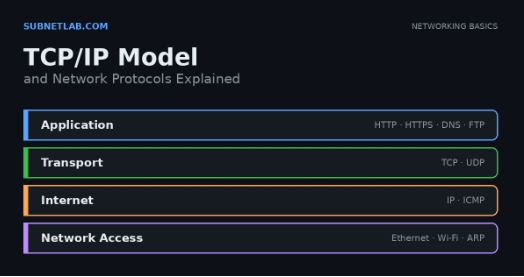 Network BlogAugust 25, 2026TCP/IP Model and Network Protocols Explained:TCP, UDP, ICMP, Handshakes, Flags, and Data Flow
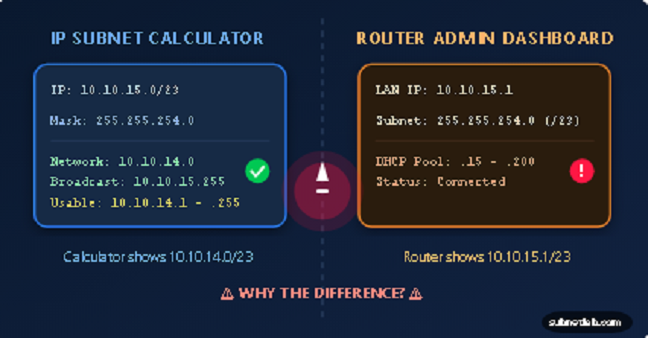 Network BlogAugust 11, 2026Router vs Calculator Showing Different Subnets? Why & the Fix
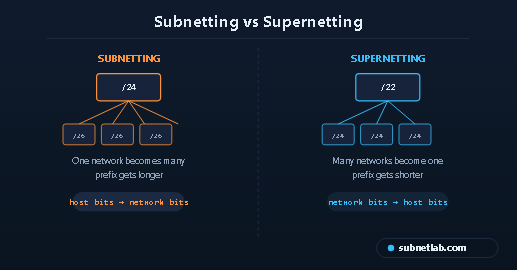 Network BlogAugust 6, 2026Supernetting Explained: The Opposite of Subnetting
 Network BlogAugust 5, 2026Ping Command Explained:Your First Tool for Network Troubleshooting