
An IP range to CIDR converter is a trending tool that helps you transform a starting IP as well as an ending IP address into one or more CIDR (Classless Inter-Domain Routing) blocks.
It makes managing your network way easier by bundling lots of IP addresses into neat, compact blocks. No need to stress over thousands of individual IPs — just use CIDR notation (like 192.168.4.0/24) to keep everything clean and organized.
This tool is widely used by:
Network engineers
System administrators
Cybersecurity experts
CCNA students who want to learn subnetting
Why Convert IP Range to CIDR?

Handling large numbers of IP ranges manually is time-consuming and boring. A CIDR range calculator tool converts IP ranges into optimized blocks to solve this problem.
Key Benefits:
Reduces routing table size
Improves network performance
Simplifies IP address management
Enables professional IP aggregation (supernetting)
For example, instead of writing:
192.168.1.1 – 192.168.1.254
You can simply use:
192.168.1.0/24
This is why CIDR block generators are important tools in modern networking.
How IP Range to CIDR Conversion Works

Following is the given process how ip range to conversion works.
Step-by-Step Process:
Identify the starting IP
Identify the ending IP
Convert IPs into binary format
Calculate common prefix bits
Generate CIDR blocks
This process is also known as:
IP range splitting
Binary subnet calculation
Network prefix length determination
A good IP to CIDR calculator automates all these steps quickly.
What is CIDR Notation
CIDR consists of two parts:
IP address, for example ( 192.168.1.0)
Prefix length, for example ( /24)
The prefix length indicates how many bits are used for the network portion.
Example:
192.168.1.0/24
24 bits → network
Remaining bits → host
This is directly related to:
Subnet mask conversion
Network address calculation
Example: Convert IP Range to CIDR
Let’s understand with a real example:
IP Range:
192.168.1.0 – 192.168.1.255
Result:
192.168.1.0/24
Another Example:
IP Range:
192.168.1.0 – 192.168.1.15
Result:
192.168.1.0/28
Advanced CIDR range calculators are very useful in complex cases because they may require multiple CIDR blocks instead of just one.
IP Range Splitting and CIDR Block Optimization

Not all IP ranges fit perfectly into a single CIDR block. In such cases, the range is divided into multiple smaller CIDR blocks.
This process ensures:
Minimal IP wastage
Maximum efficiency
Accurate IP routing blocks
Example:
Range: 192.168.1.10 – 192.168.1.50
May result in:
192.168.1.10/31
192.168.1.12/30
192.168.1.16/28
etc.
This is called the
Smallest CIDR block calculation
IP address grouping
CIDR vs. Subnet Mask: What’s the Difference?

Don’t mix CIDR vs. subnet mask.
CIDR:
Uses prefix length (e.g., /24)
More flexible
Used in modern networks
Subnet Mask:
Written as 255.255.255.0
Older format
Less intuitive
Both represent the same concept, but CIDR is preferred for:
Network optimization
IP aggregation (supernetting)
Use Cases of IP Range to CIDR Conversion
A CIDR calculator with steps is useful in many real-world scenarios:
Network Configuration
Helps assign IP blocks efficiently in routers and servers.
Firewall Rules
You can allow or block entire CIDR blocks instead of individual IPs.
Cloud Infrastructure
Platforms like AWS and Azure require CIDR blocks for VPC setup.
Cybersecurity
Simplifies IP filtering and monitoring.
Mistakes to Avoid
When converting IP ranges manually, errors are common:
- Incorrect binary conversion
Choosing the wrong prefix length
Ignoring multiple CIDR blocks
Overlapping IP ranges
Using an IP range to CIDR converter online eliminates these errors.
Quick Links
FAQs
How do I convert an IP range to CIDR instantly?
An online IP range to CIDR converter is the better choice, because this tool automatically calculates the correct CIDR blocks.
Can one IP range have multiple CIDR blocks?
If the range is not properly aligned, it may require multiple CIDR blocks.
What is the smallest CIDR block?
An IP address is basically /32 is the smallest CIDR block.
Why is CIDR better than subnet masks?
CIDR notation is basically more flexible and is used in modern networking and routing.
Is CIDR used in IPv6?
Yes, both IPv4 and IPv6 addressing use CIDR.
Conclusion
An IP range to CIDR converter tool helps you in making IP address calculations simpler and clearer with a CIDR block that works for you. It’s really a lifesaver when you’re working with subnetting, routing, or getting stuck on some tricky firewall settings. Before you can make the most of it, though, you need to get a grasp of the basics — what the CIDR format looks like, how to figure out network size, and how IP addresses get carved up into subnets.
Doing the math by hand is always a hassle and is basically a recipe for errors. That’s where a good CIDR converter comes in — it saves you time and gives you spot-on results. If you’re building a website that caters to networking tools, throwing this tool in, along with some understandable examples and step-by-step guides, is a pretty effective way to boost your SEO and keep users coming back for more.
Author Profile

-
Muhammad Kazim Ali – Owner & Principal Engineer at SubnetLab.com (real-world networking labs).
10+ years in routing, switching & infrastructure design. Helps students, pros & enterprises master networking via practical labs. Based in Lahore, works with ISPs, data centers & tech teams.
📞 +92 343 5201037 (WhatsApp) | ✉️ subnetlab.official@gmail.com | 🌐 subnetlab.com
Latest entries
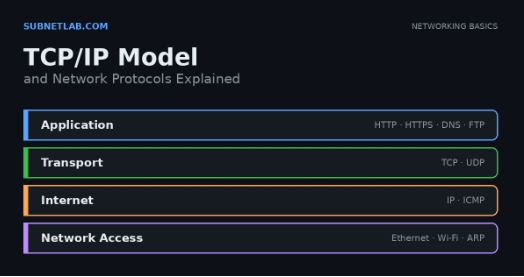 Network BlogAugust 25, 2026TCP/IP Model and Network Protocols Explained:TCP, UDP, ICMP, Handshakes, Flags, and Data Flow
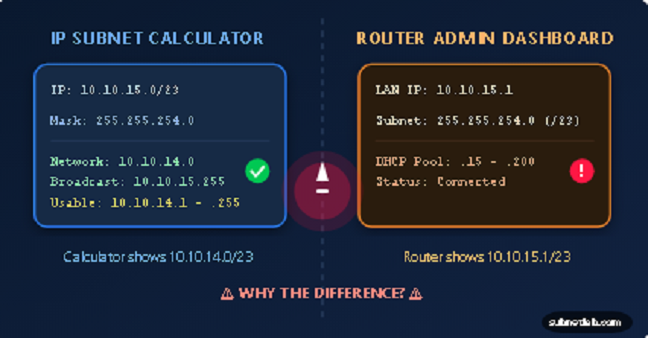 Network BlogAugust 11, 2026Router vs Calculator Showing Different Subnets? Why & the Fix
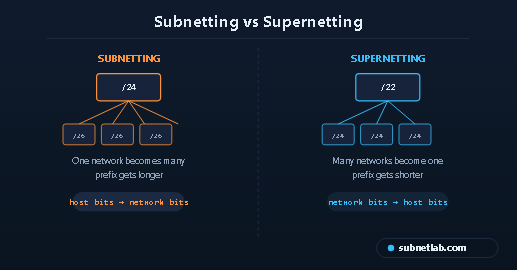 Network BlogAugust 6, 2026Supernetting Explained: The Opposite of Subnetting
 Network BlogAugust 5, 2026Ping Command Explained:Your First Tool for Network Troubleshooting